The Idealist
Hope with open eyes
Useful qualities
Noticing possibility, trusting kindness and keeping hope alive.
Possible shadow pattern
Explore this archetype →Looking away from difficulties to preserve a reassuring picture.
Choose an image that catches your eye. Turn it over for a reflection and a journalling question to help you explore what’s on your mind. Explore what you’re feeling and what might help. Receive a perspective and a small experiment to take with you. No writing needed.
Choose your card ↓Or explore the archetypes within →Free to try · No writing or account neededPause · Notice · Choose
Choose an image → Notice a feeling → Explore what might help.
There is no hidden meaning to get right. The image is simply a starting point.
18 images to explore · One card can be enough.
For personal reflection, not prediction, assessment or therapy. Read the disclaimer.
Tap any image to turn over your card. There is no wrong choice.
A little practical support
SelfImproveCoach brings together practical CBT worksheets, thoughtful journals and wellbeing resources for people exploring their own thoughts, feelings and habits, and therapists supporting others. Browse the free downloads for a useful place to begin—whether you are exploring self-esteem, communication, everyday worry or a small next step.
Another way to get to know yourself
In Jungian psychology, archetypes are recurring patterns expressed through stories, symbols and human experience. This collection explores twelve patterns from Carol S. Pearson’s later framework, from the care we offer to the courage, creativity and curiosity we bring to life. Notice their useful qualities and possible shadow patterns, including needs or strengths that may have been overlooked.
These are possibilities to reflect on, not fixed personality types. More than one may feel familiar, and what resonates can change.
Explore the archetype cardsA deeper layer · Jungian-inspired exploration
Meet twelve patterns of motivation, strength and possibility. Choose an image, turn the card and explore what feels familiar today.
Patterns, not fixed personality types. You may recognise several, and different patterns at different times. A card does not identify or diagnose you.
Foundations: Carl Jung’s writings on archetypes ↗
Summaries of his Collected Works, Volume 9, Part 1, from the International Association for Analytical Psychology.
Later framework: Carol S. Pearson’s twelve archetypes ↗
Original interpretations and illustrations by Oracle Cards Reading.
The Idealist
Noticing possibility, trusting kindness and keeping hope alive.
Looking away from difficulties to preserve a reassuring picture.
The Realist
Recognising limits, valuing solidarity and meeting life as it is.
Expecting disappointment so strongly that support or possibility gets dismissed.
The Warrior
Standing up for what matters, persisting and taking purposeful action.
Treating every difficulty as a battle, or pushing beyond your limits to prove yourself.
The Caregiver
Offering warmth, attentiveness and practical support.
Overgiving, taking over or tying your worth to being needed.
The Seeker
Exploring possibilities and questioning whether a familiar path still fits.
Always looking elsewhere, or leaving before discovering what staying might offer.
The Lover
Valuing closeness, beauty, devotion and wholehearted engagement.
Losing your preferences in a relationship or making approval the measure of your worth.
The Revolutionary
Questioning unhelpful rules and making space for necessary change.
Rejecting everything at once, or making disruption an end in itself.
The Creator
Imagining, making and giving form to something meaningful.
Holding an idea to such exacting standards that it never becomes a first attempt.
The Sage
Asking thoughtful questions, weighing evidence and seeking understanding.
Continuing to analyse when a decision, feeling or lived experience needs attention.
The Jester
Bringing play, perspective and relief from excessive seriousness.
Using humour to dismiss pain, avoid an honest moment or make someone else smaller.
The Magician
Imagining change and connecting ideas into a new perspective.
Expecting intention alone to determine outcomes, or overlooking practical limits.
The Ruler
Creating order, taking responsibility and coordinating shared efforts.
Overcontrolling details or treating uncertainty as something that must be eliminated.
Jung explored archetypal imagery in The Archetypes and the Collective Unconscious, part of his Collected Works (Volume 9, Part 1). Explore the IAAP summaries of Jung’s work ↗.
This collection uses the twelve-archetype framework developed by Carol S. Pearson, building on Jungian ideas. Names follow Pearson’s current terminology; earlier names include Innocent (Idealist), Orphan (Realist) and Destroyer (Revolutionary).
The collections, descriptions, examples, questions and artwork here are original Oracle Cards Reading interpretations. This is an independent educational exploration, not Pearson’s assessment, a personality test or an endorsed product.
“Shadow” is used here as a reflective lens for qualities we overlook or patterns that become restrictive. It is not a bad or separate self. Jungian ideas are interpretive frameworks, not established explanations of every person’s experience.
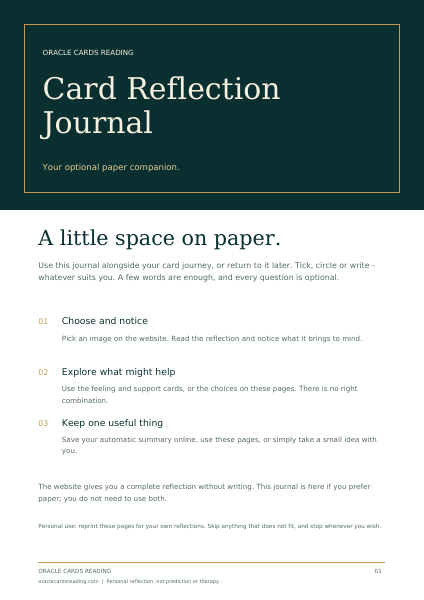
Your optional paper companion
Download the free companion journal to revisit your card, explore what you need and notice what happens next. Use as much or as little as you like.
Free PDF · Print and reuse · No signup needed
Signing up is optional. Unsubscribe whenever you wish. Privacy & Cookies.
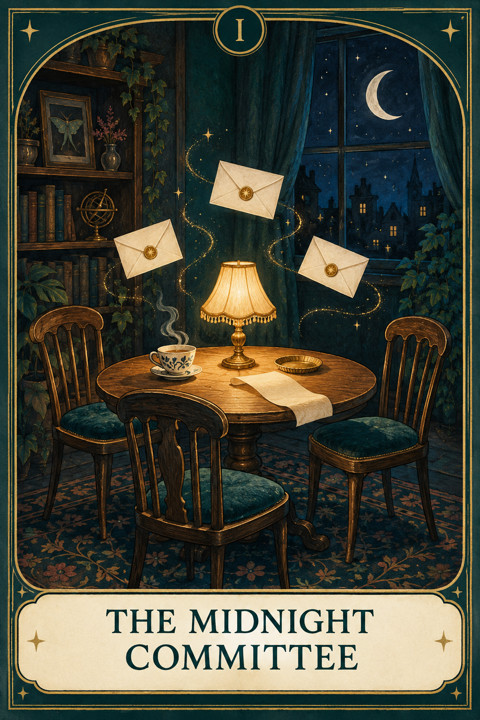
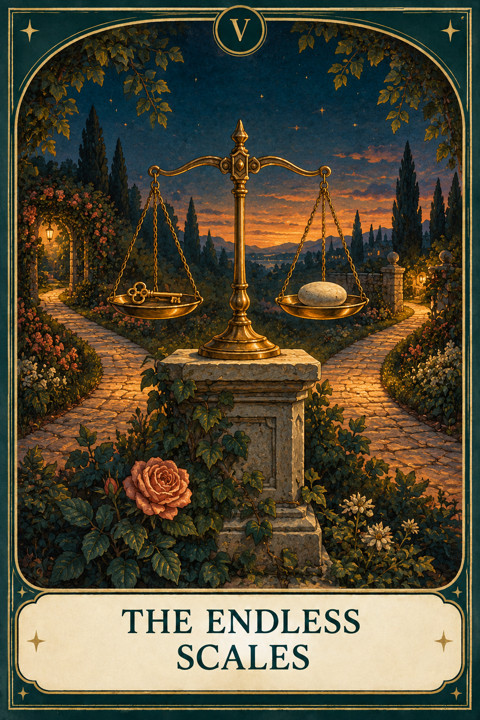
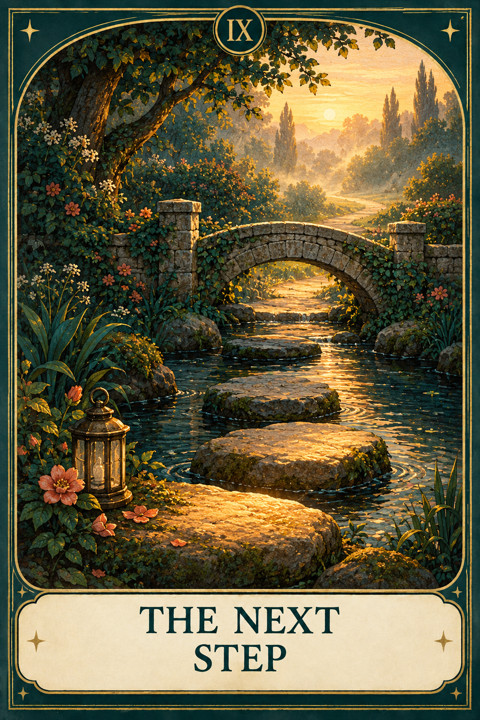
A little perspective for a busy mind
When a conversation keeps replaying, a decision won’t settle or your mind calls a meeting at midnight, start with one card.
Explore nine illustrated reflections, each with a thoughtful perspective, a gentle question and one small experiment to consider. Read at your own pace. Writing is optional.
One payment · Digital PDF download via Payhip
No subscription. No physical item supplied.
The accompanying guide draws on ideas from cognitive behavioural psychology to explore familiar patterns of worry and overthinking—from replaying conversations and seeking certainty to perfectionism and self-criticism.
The symbolic imagery offers a starting point for recognising these patterns. Each reflection provides an accessible perspective, a gentle question and a small experiment to consider—helping you distinguish thoughts from facts, make room for uncertainty and explore a manageable next step.
No psychology knowledge or journalling required. Read at your own pace and take what feels useful. This is an educational reflection resource, rather than a psychological assessment or treatment programme.
About this experience
These original cards offer a pause in the day: an image, a perspective and a question. Keep what feels useful. Leave what does not.
This experience is for creative reflection and entertainment. It does not predict the future and is not a substitute for psychological therapy, medical care, diagnosis or professional advice.